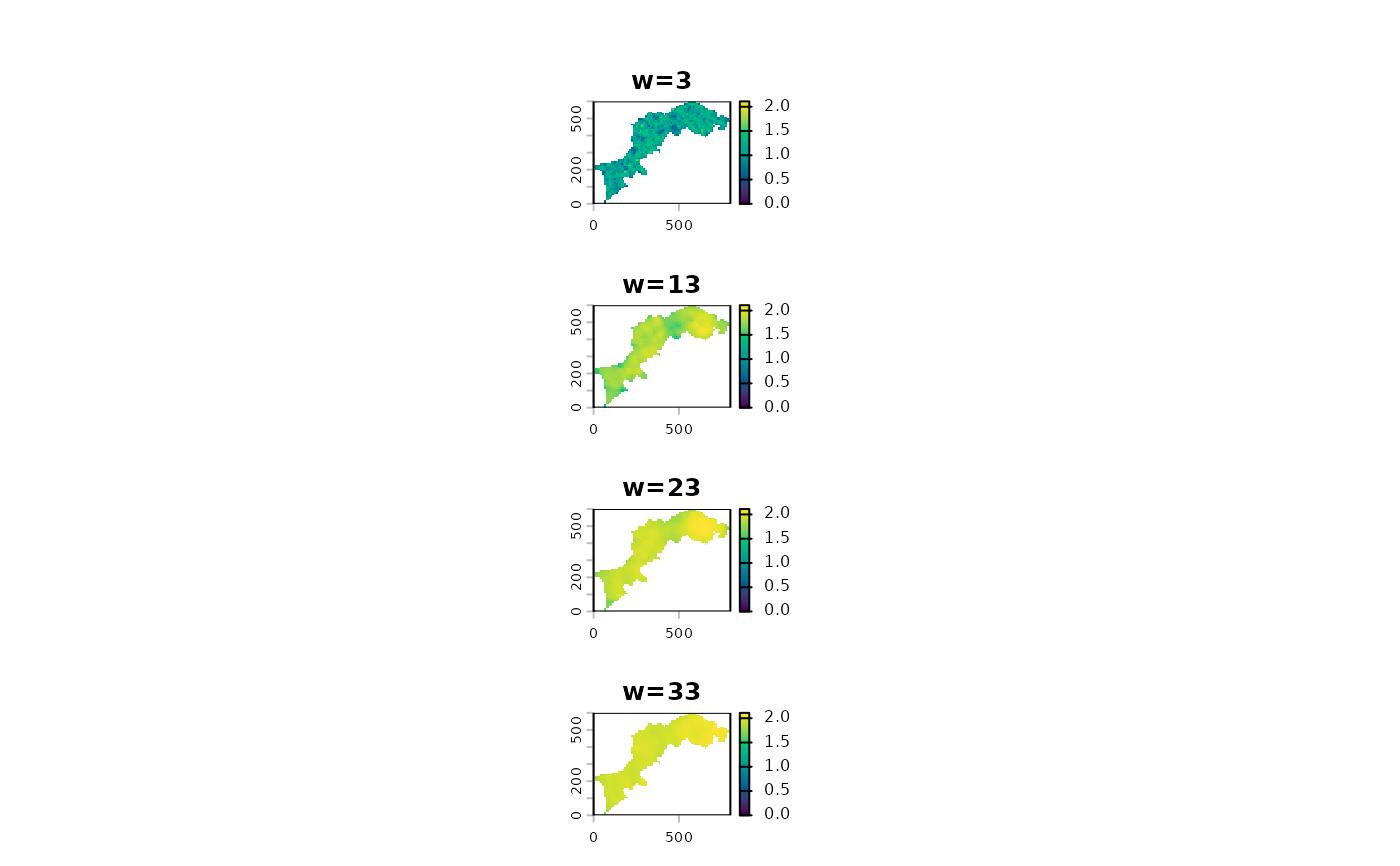
For what we have to represent, this is a better plot for SpatRaster
than base terra's plot. The main benefit being
sharing the legend across monoscale maps.
Usage
p(
  x,
  palette = "Viridis",
  asp = 1,
  ncol = NULL,
  title,
  multi_title,
  global_range = TRUE,
  ...
)
Arguments
- x
- palette
one of grDevices::hcl.colors palette description (default to
viridis)- asp
target aspect for the layout (default to 1 that is a square)
- ncol
integer number of columns for the layout, if provided
aspis ignored- title
for each plot, if missing use
names(x)- multi_title
for the general plot (eg when more than one layer)
- global_range
logical, default to
TRUE, whether to use a global range for all layers- ...
additional parameters to single
plotcall
Examples
# first calculate a small and simple MHM
l <- import_example("l1.tif") %>%
raster_resample(0.1) %>%
MHM(window=c(3, 13, 23, 33), fun=shannon)
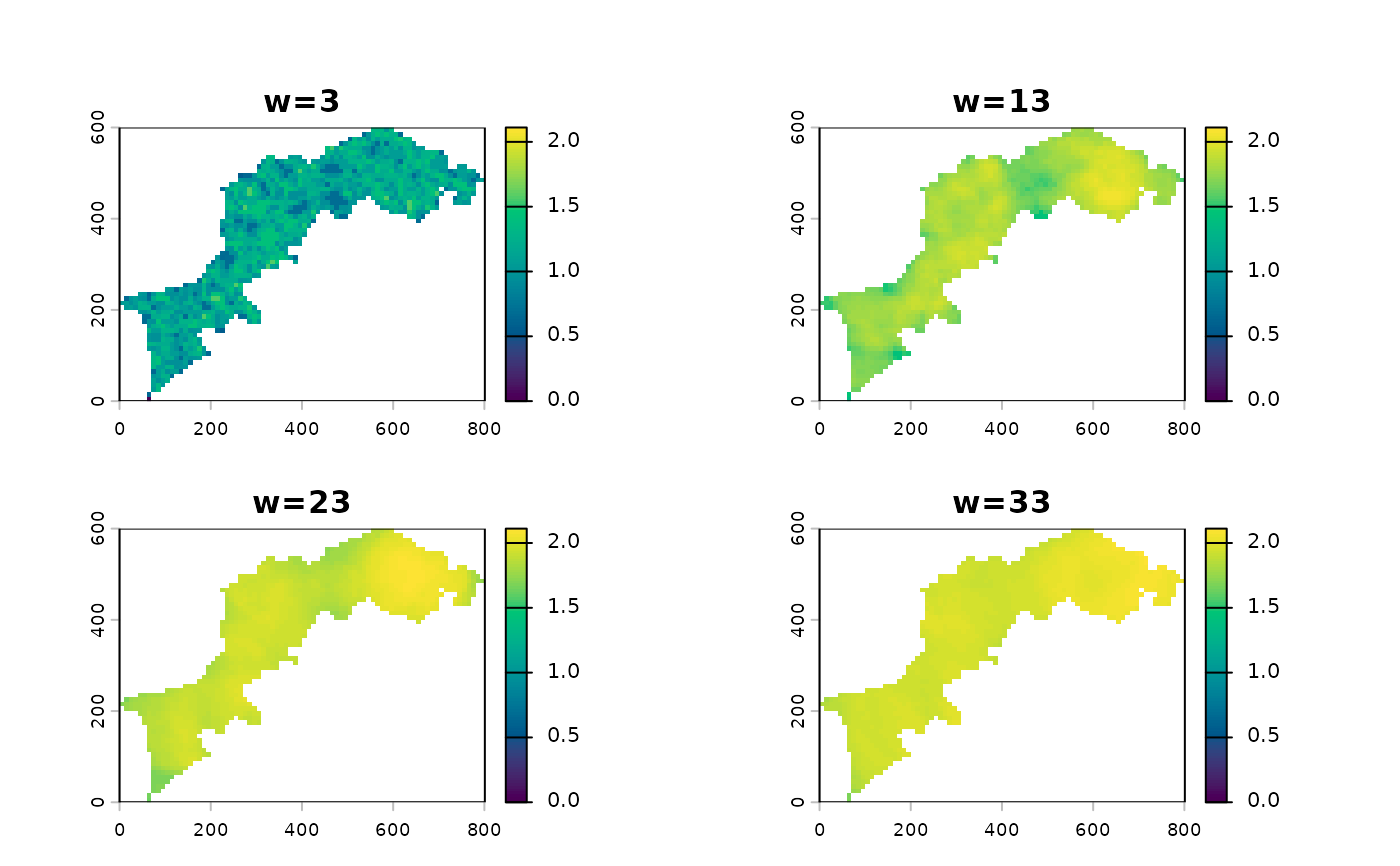
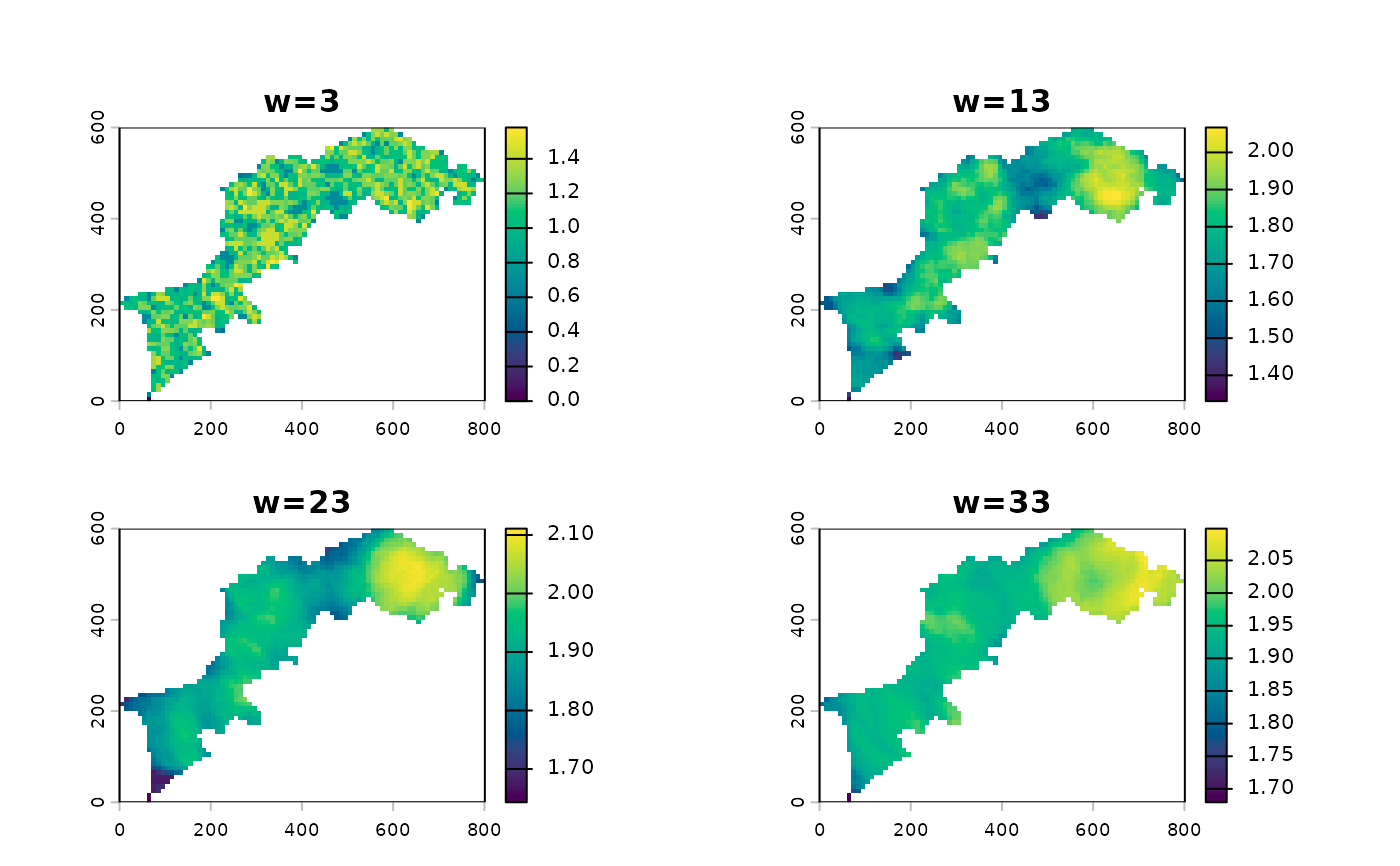
# global range or not
p(l) # by default global_range is TRUE
 p(l, global_range=FALSE) # each mono map has its scale
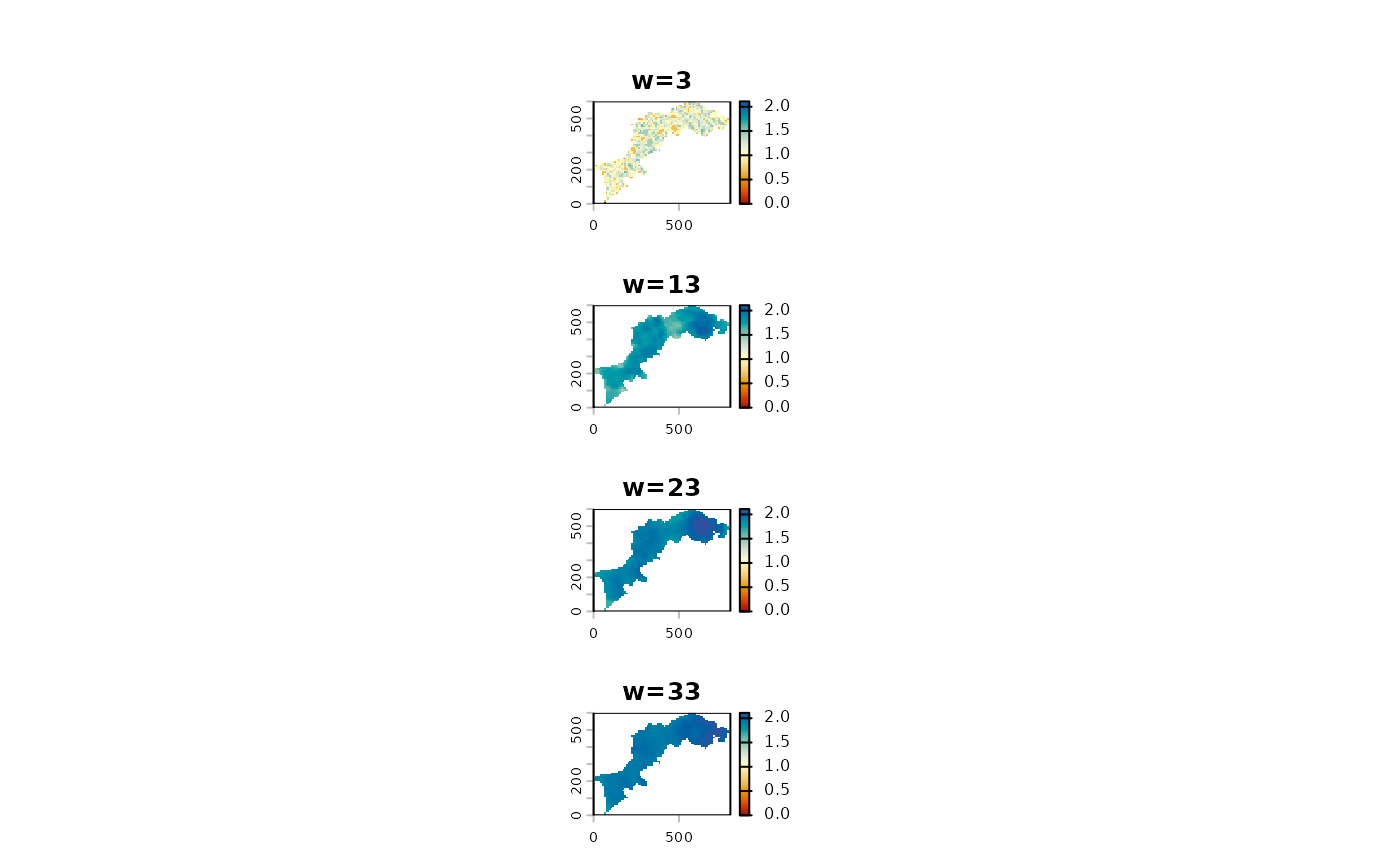
 # change palette
p(l, palette = "RdYlBu", ncol=1) # change the color palette for one of hcl.pals()
# change palette
p(l, palette = "RdYlBu", ncol=1) # change the color palette for one of hcl.pals()
 # manage title(s)
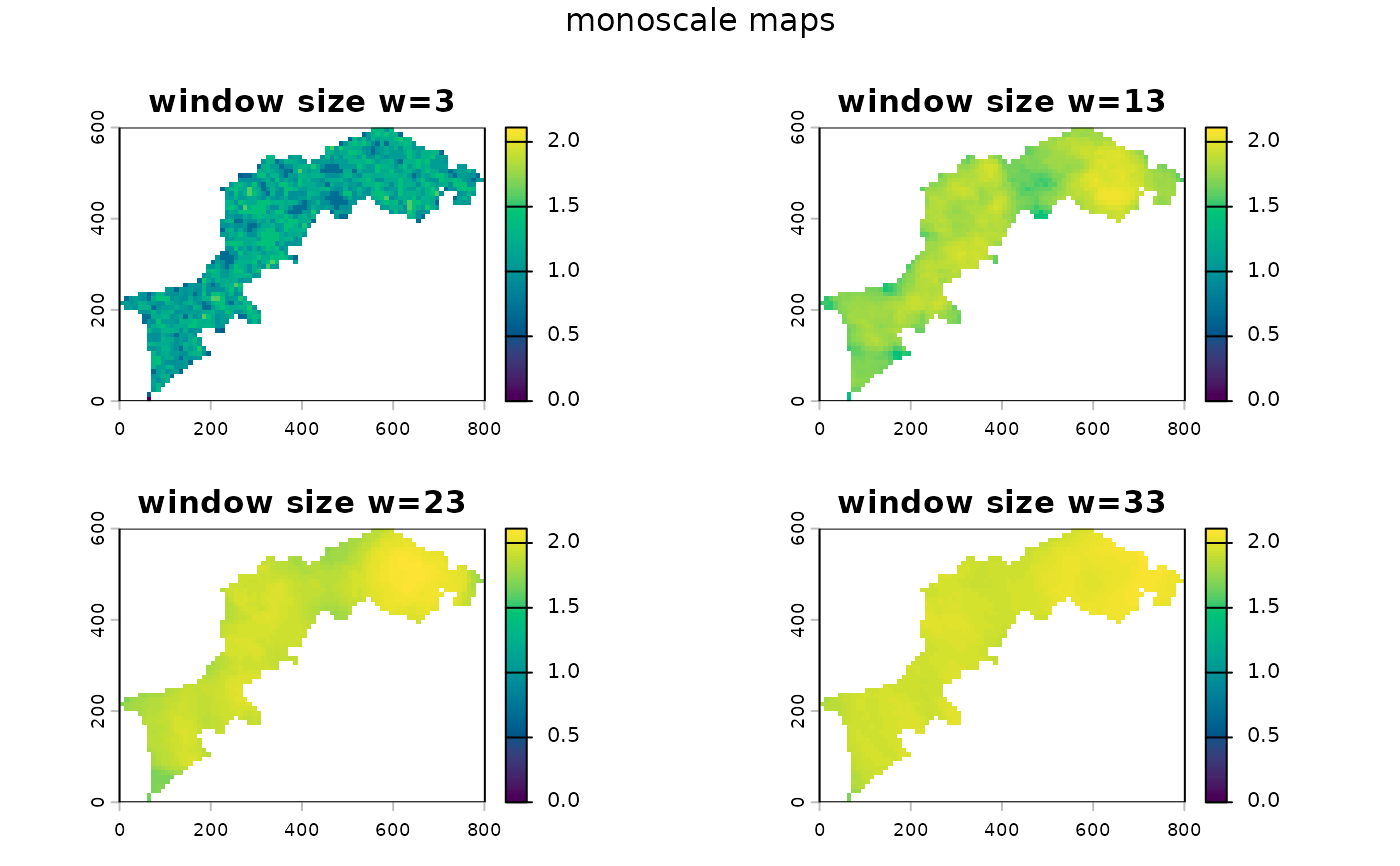
p(l, multi_title="monoscale maps")
# manage title(s)
p(l, multi_title="monoscale maps")
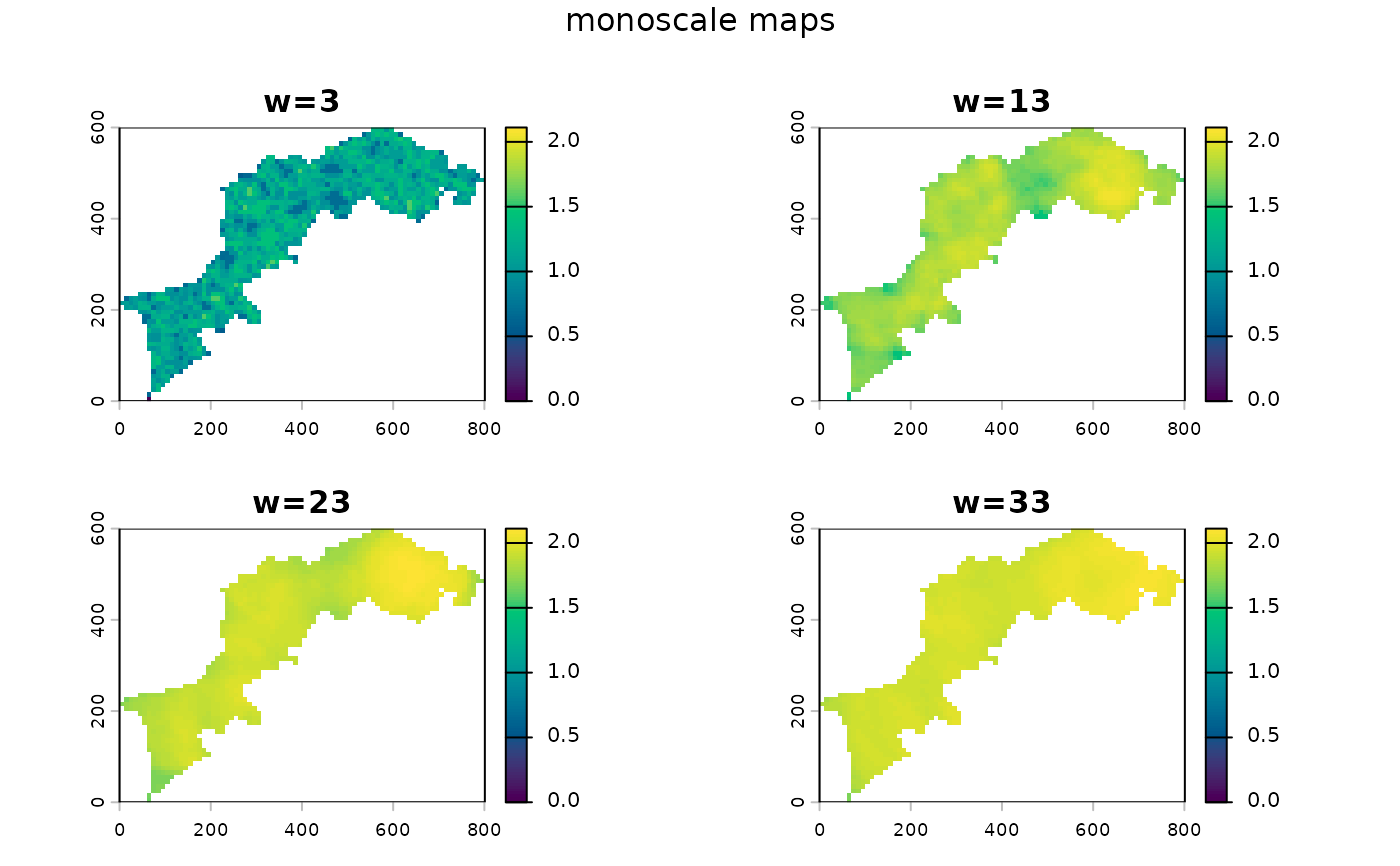 p(l, title=paste0("window size ", names(l)), multi_title="monoscale maps")
 # change aspect
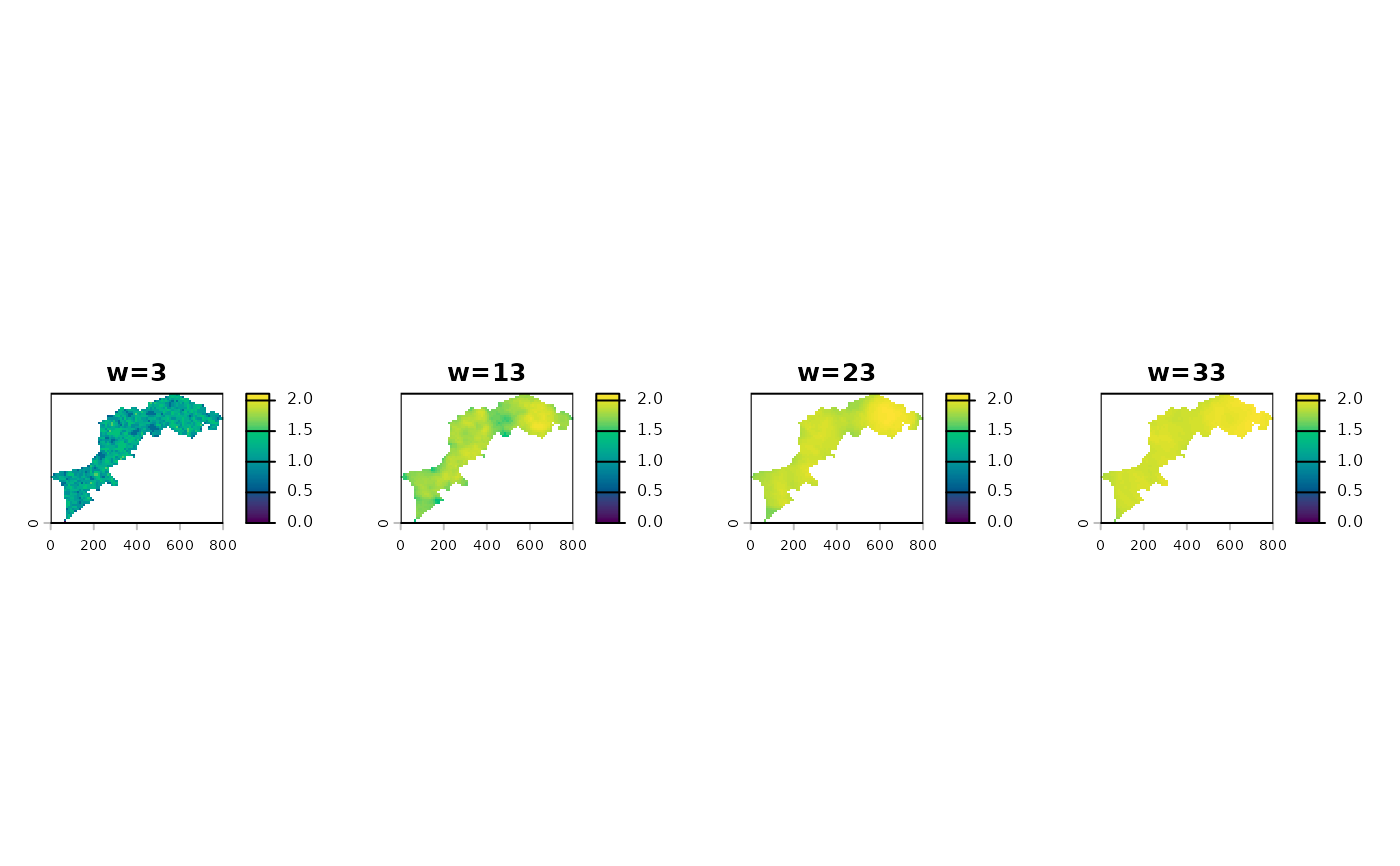
p(l, ncol=4)
# change aspect
p(l, ncol=4)
 p(l, ncol=1)